Gardens for the Swiss Climate: Planning for Drought, Heat and Altitude
A garden that was properly planned fifteen years ago is not automatically right today. Switzerland’s climate has shifted, and measurably so. Anyone planting today is planning for conditions that did not exist before.
What Has Changed
Since records began, Switzerland has warmed by well over twice as much as the global average. Compared with pre-industrial times, the average temperature is now around 2.9 degrees higher; globally, the figure is about 1.3 degrees. This is not a forecast but a measurement.
For the garden, what matters most is how this plays out in summer. Summers are getting hotter, with more hot days and more nights that barely cool down, and soils dry out more during the warm season. Summer drought has increased over recent decades. At the same time, rain more often falls as intense downpours that run off quickly instead of slowly soaking into the ground. For plants, this is the least favourable combination: more heat, longer dry spells and, when it does rain, often too much at once. On the other hand, the growing season in the lowlands now lasts several weeks longer than it did in the 1960s, which tends to increase rather than reduce the demands on maintenance.
What This Means for Planting
The obvious answer would be simply to water more. That is expensive, sometimes restricted in dry summers, and it only treats the symptom. The better way forward lies in plant selection.
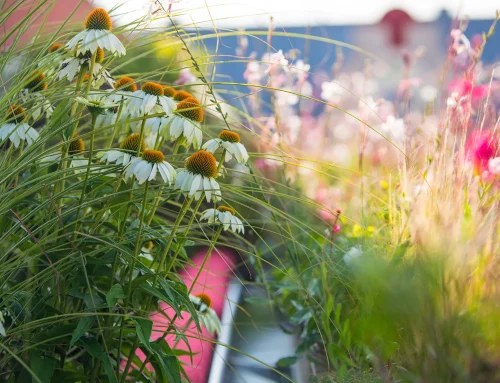
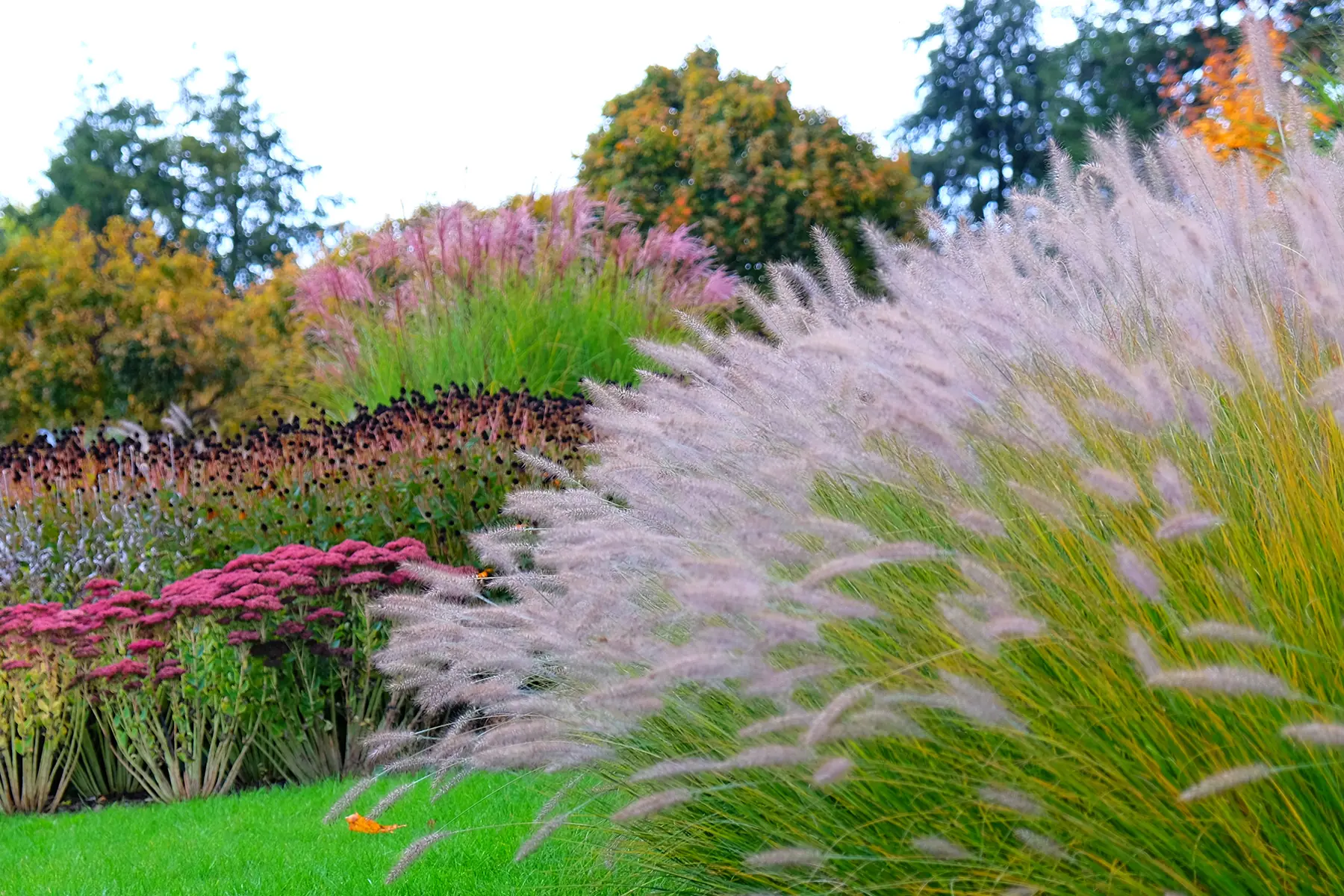
Drought-tolerant plants manage with less water because they are built for it: deep roots, small or hairy leaves, an economical water balance. Examples include lavender, Russian sage, catmint, yarrow, woodland sage (Salvia nemorosa) and stonecrop, along with many ornamental grasses. Such plantings do not look meagre; quite the opposite. They have a relaxed aesthetic of their own and often flower over long periods.
The Soil Matters Too
The soil is just as important as the plant. A soil that absorbs and stores water well bridges dry spells more effectively. A layer of mulch slows evaporation and keeps the moisture down where the roots need it. This invisible layer beneath the planting often does more to decide whether plants thrive than the choice of plants itself.
Water itself can also be managed more intelligently. If heavy rainfall is becoming more frequent anyway, it makes sense not simply to send it into the drains but to keep it in the garden: through surfaces that let water soak away instead of sealing the ground, through swales that hold water back and, where necessary, through a rainwater tank that stores it for dry spells. In this way, the same rain that is seen as a problem becomes a reserve.
Shade is another lever. On a hot day, a well-placed tree noticeably lowers the temperature beneath its canopy and protects the plants below from the strongest sun. Shade is therefore more than comfort for people; it works as a tool against heat within the garden itself. Where a canopy casts shade, less water evaporates from the soil, and the plants beneath it come through a heatwave considerably better.
Altitude Is a Chapter of Its Own
In my core territories, the Valais and the mountain regions of western Switzerland, a second dimension comes into play: altitude. A garden in Saas-Fee or Crans-Montana follows different rules from one on the Swiss Central Plateau.
With increasing altitude, the growing season, the period in which plants grow at all, becomes shorter. Late frosts in spring and early frosts in autumn narrow the window further. Winter brings snow loads that break branches, and spring brings strong sun that can dry out evergreens while the ground is still frozen. What counts at altitude is therefore not drought tolerance alone, but above all winter hardiness and the ability to cope with short summers and long winters.
A plant that thrives reliably in the Bernese Seeland region may die in its first hard winter at 1,500 metres. That is why a plant list cannot simply be transferred from one location to another.
The Lawn Under Scrutiny
One point deserves particular attention because it is so widespread: the lawn. In today’s summers, a large, lush green lawn is one of the thirstiest parts of the garden. It needs regular watering, otherwise it turns brown, and that very water is scarce or restricted in dry summers.
This does not mean the lawn has to disappear. But it is worth asking how much of it is really needed. A smaller, deliberately placed lawn for play and relaxation, complemented by drought-tolerant planting or a wildflower meadow, needs less water and less work while offering more for insects. The garden loses nothing in the process; it gains character.
The Right Timing
The moment of planting also plays its part. Planting in autumn gives the roots time to establish over winter before the first summer heat arrives. A plant set out in spring, or even in high summer, is under stress straight away and needs a great deal of water in its first year just to take root. A well-planned garden therefore considers not only the what, but also the when.
If You Water, Do It Properly
Hardly any garden manages entirely without water, especially in the first years after planting. What matters is how. Watering infrequently but thoroughly draws the roots down to where the soil stays moist for longer. A light sprinkling every day keeps the roots near the surface and makes the plants all the more dependent on the next watering.
Water is most effective when it reaches the roots directly, for example through a drip hose, and when it is applied early in the morning, before the heat can evaporate it. This gets the greatest benefit from scarce water instead of losing half of it to the air.
The Real Consequence
What follows from all this is less a catalogue of the right plants than an approach: read the site before you plant. How much sun, what soil, what altitude, what water conditions, how much wind. Only these conditions show what will work in the long term in a particular place.
The changing climate makes this care more important, not less. A garden that suits its site needs less water, less maintenance and less remedial work. This makes it more resilient and, over the years, also more economical. Planting against the climate is expensive. Planning with it pays off.