What a Garden Really Costs
The most common question before a garden project is: what will it cost? It is a fair question, but usually too narrow. A garden does not cost money just once. It costs money over its entire lifespan, and the greater part of those costs only arises after it has been built.
Looking only at construction costs means seeing just the tip of the iceberg.
The Four Cost Components
Roughly speaking, the costs can be divided into four components.
- First, the planning: concept, detailed design and site supervision.
- Second, the construction itself.
- Third, the plants, from perennials to a large specimen tree, whose price many people underestimate. And fourth, maintenance over the years.
Everyone sees the first three components, because they come at the beginning and appear in a quote. The fourth tends to be pushed aside, even though over time it is often the largest.
Why Construction Costs What It Does
Construction accounts for the largest individual items, and most of it is not green but hard. The hard landscaping determines the price: natural stone paving, a retaining wall, a flight of steps, an edging. Elements like these cost many times as much as a lawn, because they require excavation, foundations, materials and a great deal of manual work. Anyone wanting to estimate the cost of a garden should therefore look first at the proportion of walls, paths and paving, not at the plants.
This is not bad news – quite the opposite. It is precisely these hard elements that carry a garden for decades. But they explain why two gardens of the same size can differ in price several times over. The ground conditions also play a part: a slope, poor soil or narrow access drive up the costs before a single plant has gone in.
Why Maintenance Decides in the End
A garden is not a finished object but a living system. It grows and changes, and it needs to be pruned, weeded, watered and cared for. This work comes round every year, and over twenty or thirty years it adds up. Depending on the design, maintaining a garden over its lifespan can cost more than building it.
The crucial point: the level of maintenance is not determined later, in the course of gardening, but early on, at the drawing board. The design determines the running costs.
A few examples. A large, precisely clipped formal hedge looks wonderful, but needs several cuts a year. An expansive lawn has to be mown, watered and scarified. An elaborate seasonal bedding scheme has to be replaced twice a year. If instead you choose robust, site-appropriate perennials and woody plants that suit the soil and the climate, the maintenance required drops considerably without the garden losing quality. It simply looks different, not worse.
False Economies
The most expensive mistakes happen where savings are made at the start. Soil that was not properly prepared before planting leaves plants struggling, and they later have to be replaced. A tree planted in the wrong position either fails to establish or becomes a permanent problem. Undersized drainage takes its revenge with the first heavy downpour.
Mistakes like these cost twice: once for the original work and again for the correction. Anyone who saves on design and execution and then builds something high-maintenance or prone to faults is merely shifting the costs into the future. They do not disappear; they come back later, and usually bigger.
Why I Charge for the Work Involved, Not by Construction Volume
For this reason, I think little of calculating planning fees as a percentage of the construction volume, as is common practice. This logic rewards expensive building: the more that is built, the higher the fee. It sets the wrong incentive.
Instead, I charge for the work involved, with tiered hourly rates that reflect the complexity of each project phase. A design that makes the garden more affordable and lower-maintenance is therefore not against my interests, but in yours. It is precisely this independence that matters.
And the Value?
That leaves the question of whether it pays off. A well-maintained, well-designed garden is regarded as a value driver for a property. Internationally, the increase in value is put in the double-digit percentage range. However, no reliable Swiss figure exists, and blanket percentages should be treated with caution.
More important than any figure is substance. A durable structure and well-maintained planting preserve value. A neglected garden diminishes it, no matter how much it originally cost. The value lies not in the construction, but in the garden’s condition over time.
Two Gardens, Calculated Over Time
Imagine two gardens of the same size. The first is built cheaply, with a lot of lawn, a long clipped hedge and seasonal bedding that is renewed twice a year. The bill at the end of construction looks good. After that, however, this garden demands work week after week: mowing, watering, clipping, replacing.
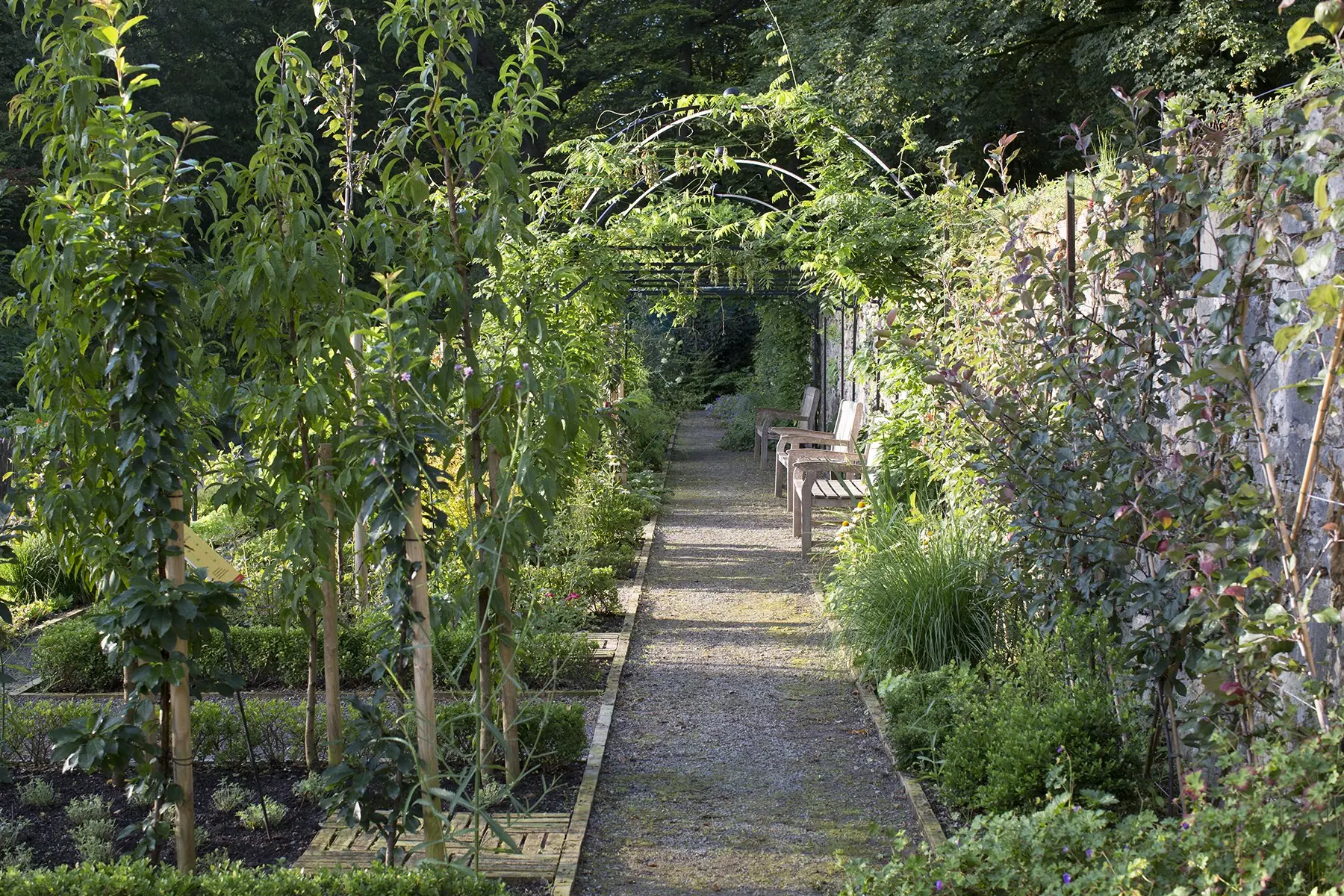
The second costs a little more to build, because the soil and paving have been carefully prepared and laid, and the planting consists of robust, site-appropriate perennials and woody plants. In return, it needs only a fraction of the maintenance over the years.
Calculated over twenty years, the picture is reversed. The seemingly more expensive garden turns out to be the cheaper one in the end, and it looks better the whole time. The construction cost alone would have been misleading.
An Honest Look at the Outset
The sensible starting point for a project is therefore not a figure but an honest assessment: what is possible, what suits your site, and what does that mean for maintenance and the budget over the years? It is worth factoring in a reserve for maintenance from the outset, rather than looking only at the construction cost. Anyone who calculates the cost of a garden over its entire lifespan makes better decisions than someone who looks only at the initial price. It is also often worth planning a project in stages instead of building everything at once. This spreads the investment over several years and lets the garden grow along with the people who live in it. The cheapest quote is rarely the cheapest garden.