Your Dream Garden,
Professionally Project Managed

With Daniel Auderset, your dream garden is managed personally from start to finish. Whether it’s a new design or a redesign, he plans and designs your outdoor space, supervises construction on site and takes responsibility for the garden’s maintenance over the years.

As a landscape architect, Daniel Auderset remains your personal point of contact, from the initial design concept to completion and beyond.

Landscape architect working on a laptop in a modern office with a black wall.

One Point of Contact
to Ensure Continuity Throughout Your Project

Many gardens and outdoor spaces take shape through the interaction of designers, garden contractors and other specialists. It is during the handover stages between these different specialists that mistakes can occur and quality can be lost, as no one takes overall responsibility. Daniel closes this gap by combining creative, technical and commercial responsibility throughout the entire project. For you this means a trusted single point of contact who guides your project through every phase. It takes the coordination off your hands and ensures that your original idea is carried through to the finished garden.

The Right Team for Your Project

Daniel Auderset has no garden contracting business of his own. Instead, he personally selects a bespoke team of specialist partners for your project: garden contractors, specialist planners and tree, shrub and plant nurseries, chosen to suit the task at hand. This means your garden is always in the hands of the specialists best suited to its particular requirements. This independence is not a coincidence but a principle. It puts the quality of your garden ahead of keeping a fixed business busy, and allows the team to be assembled afresh for each project.
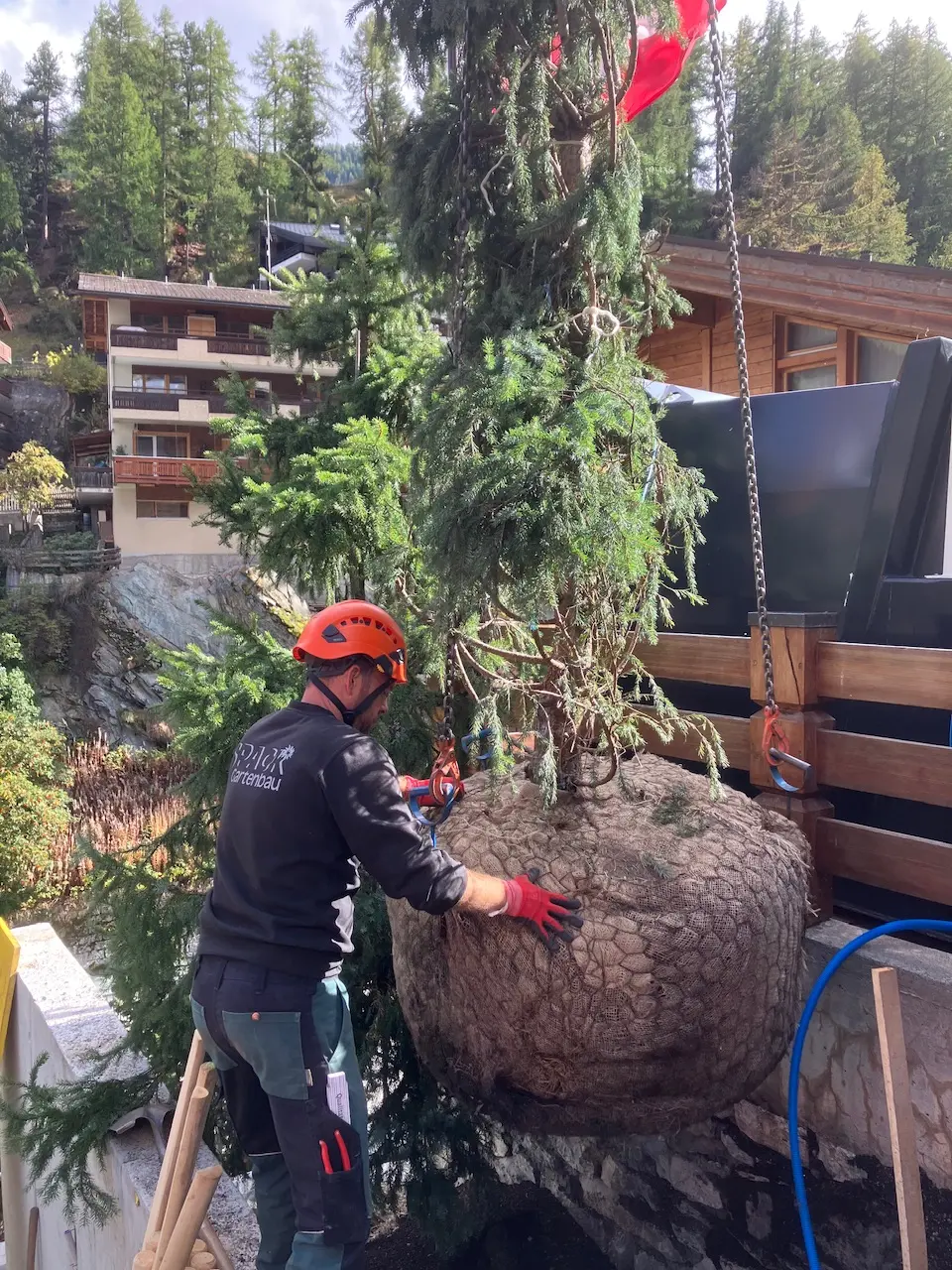
Worker with safety equipment positioning a large natural stone on a climbing rope.

The Four Phases of Your Garden Project

To create a garden that will last for decades, Daniel Auderset works in four phases: Clarity, Concept, Realisation and Continuity. Each phase has a clear purpose, and throughout each phase Daniel will work closely with you to ensure you are fully updated on progress. This way, you will always know what stage your project is at and what comes next.

Phase 1: Clarity

It all begins with a detailed review and honest assessment. Together, you will clarify what is possible on your site, how much maintenance the garden will later require and what level of investment is realistic, all before the first plan is drawn. Daniel will also tell you what he advises against. Just as important is how you want to use your garden, whether that’s for family, entertaining or as a quiet retreat. Afterwards, you know where you stand and can make decisions on a reliable basis.

Phase 2: Concept

During the concept phase, the possibilities become a design. Daniel Auderset develops the design and planning in preparation for construction, to the point where your garden can be built. Core to the design is a clear basic structure of carefully selected trees, shrubs and evergreen topiary that gives the garden stability in summer and winter alike. Within this order, there is room for vibrant, naturalistic planting. The planning includes the design and construction drawings, the planting plan and the choice of hard landscaping materials. At the end, you hold a concept that is aesthetically convincing and ready to be built.

Phase 3: Realisation

Now your garden is built, and this is where the value of continuous project management becomes clear. Daniel Auderset personally takes on site supervision and checks the works, both creatively and technically. He provides the bridge between design and realisation, ensuring quality is maintained down to the smallest detail. For Daniel, site supervision is not an add-on, but a distinct and central part of the value he delivers. For you, it simply means that what was planned is built as planned.

Phase 4: Continuity

Completion does not mean your garden is finished; it means it can now begin to grow and develop. In the continuity phase, Daniel Auderset supports the garden’s development with a maintenance package and regular garden checks over the years. The structure remains, the planting matures, and maintenance holds both together over time. The result is a valuable garden that will last for generations.
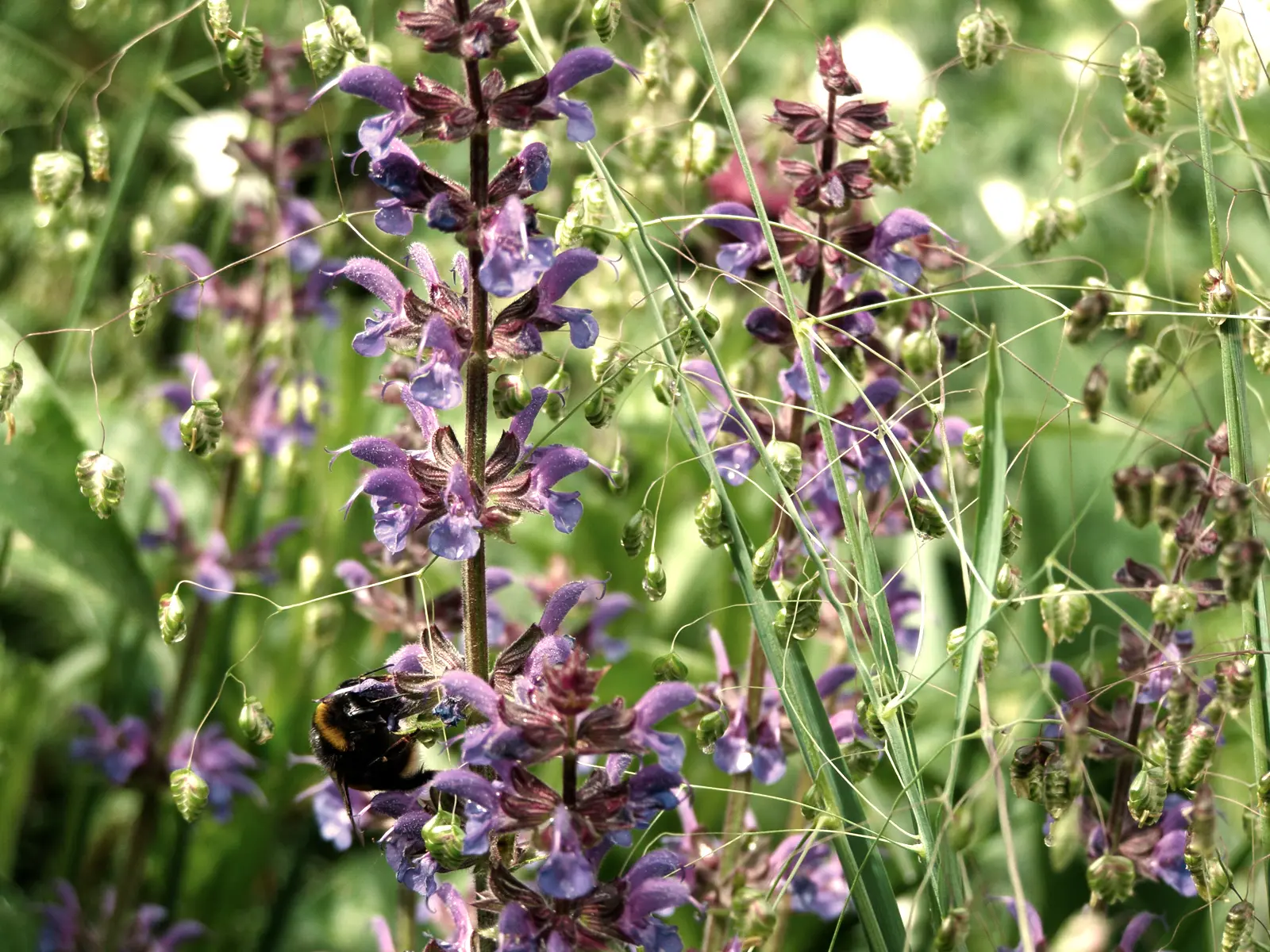
Bumblebee gathering pollen from violet flower spikes of a medicinal herb.

Clear Communication and Budgeting

Daniel Auderset is not only an award-winning landscape designer but also a trained business economist. As a project leader and landscape architect, and later as CFO at several renowned Swiss landscape architecture practices, he has always used his affinity for numbers to ensure projects run efficiently and cost-effectively. Your garden now benefits from this experience. From the outset, you will receive a transparent assessment of the costs and time required for your project, and Daniel will keep you informed and consulted on every important decision. He will discuss any additional costs with you before they arise, so they do not first appear on the final invoice. Because the same person plans, supervises construction and handles the invoicing, your budget remains transparent throughout every phase. Creative ambition and commercial care come together in a collaboration you can rely on.

Daniel Auderset’s Signature: Structure, Elegance and Poise
Every garden by Daniel Auderset begins with two questions: What does this place want? And how do you want to live in it? The answers shape a garden that gives you a framework and structure without confining you. Three words describe his signature style: structure, elegance and poise.
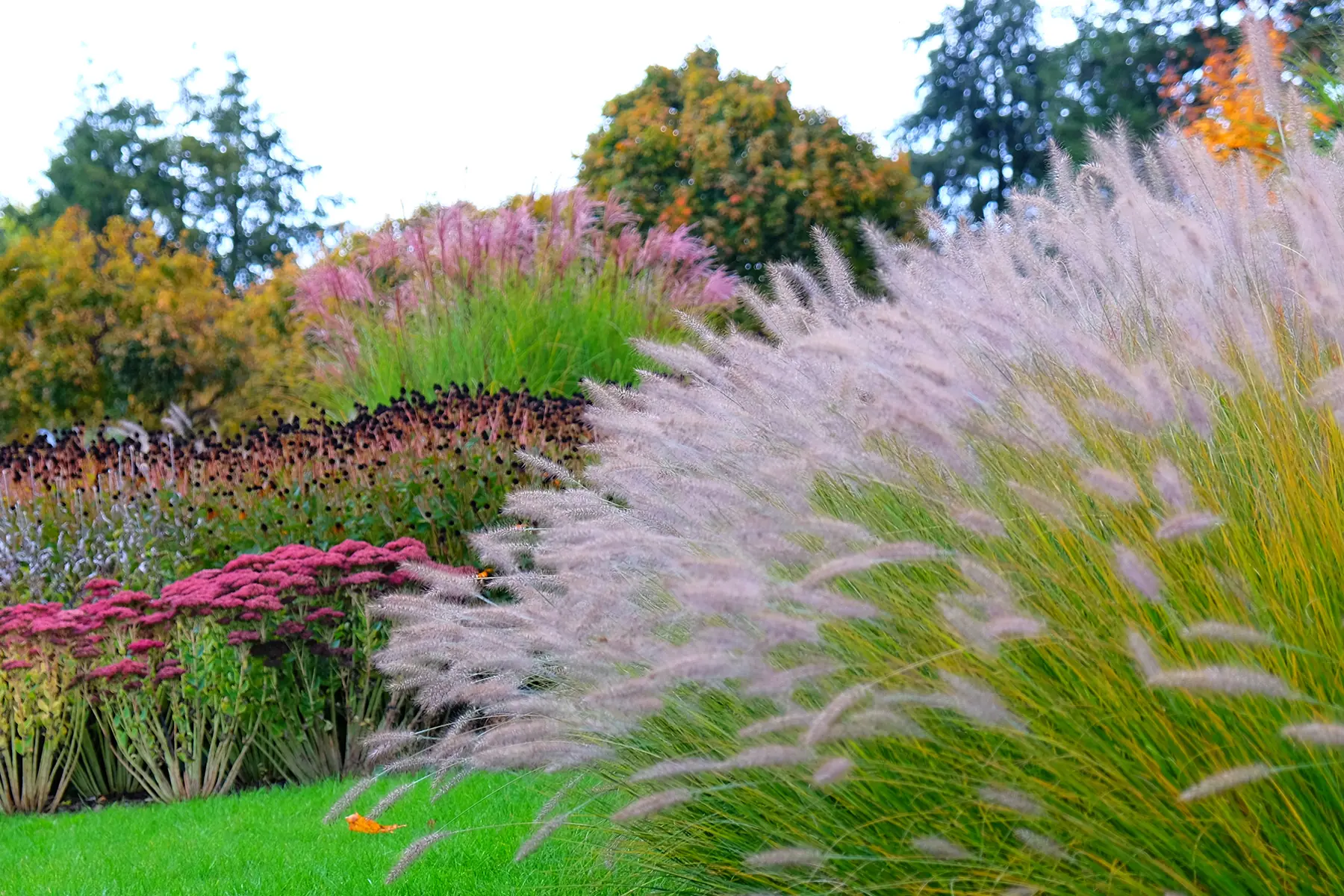
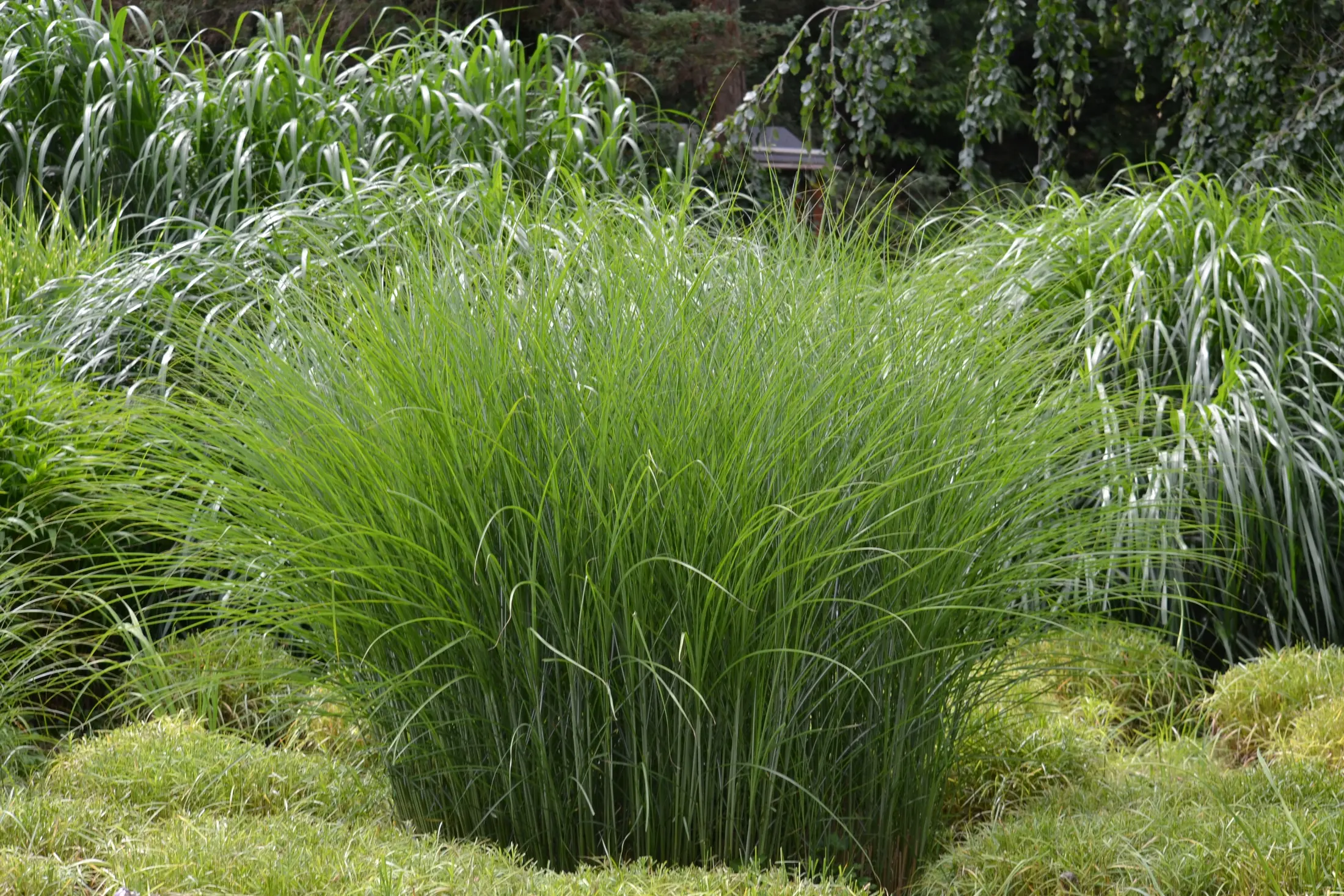
Fine ornamental grass with loose green foliage planted in a broad group.
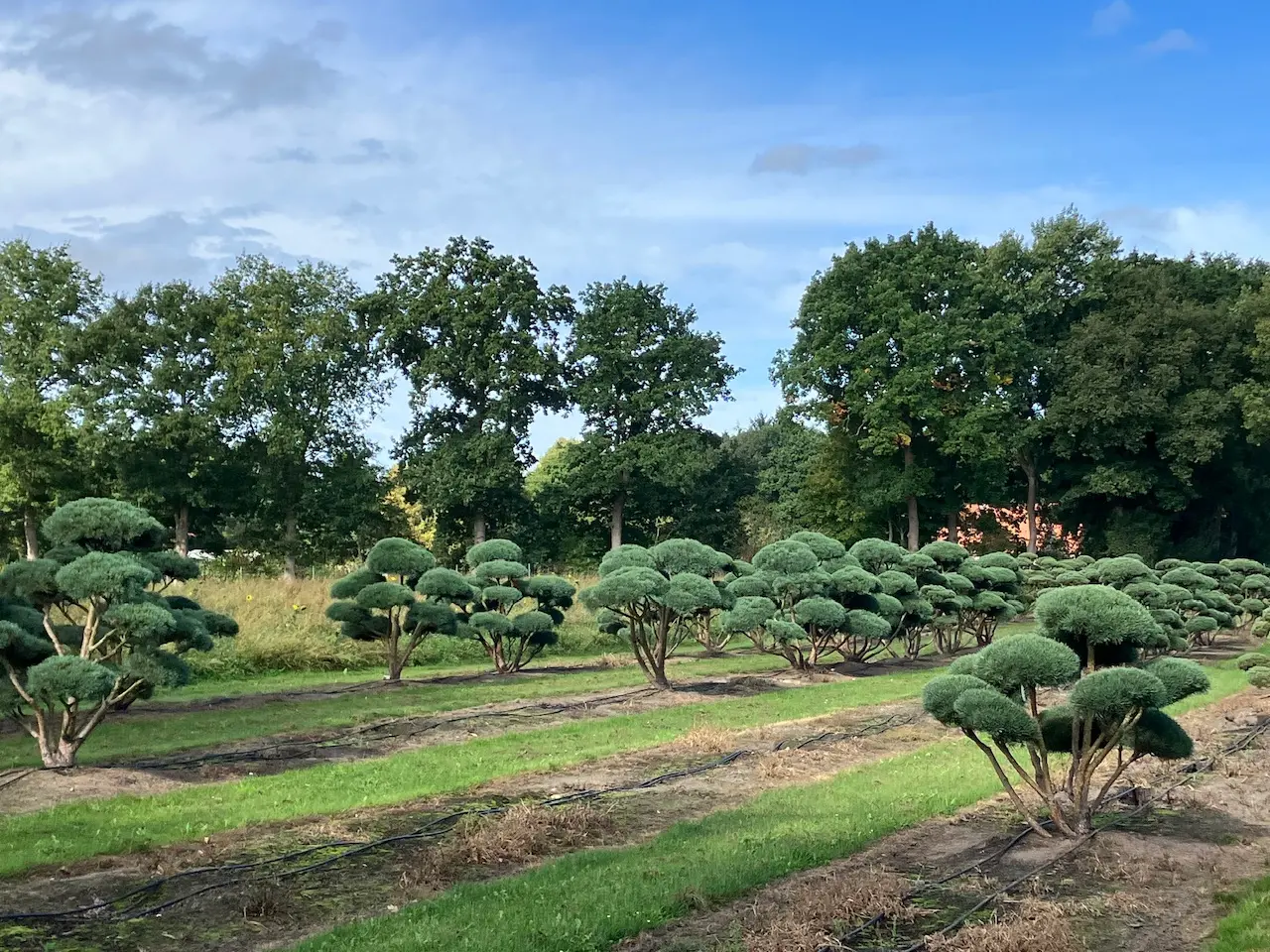
Artfully clipped bonsai-style conifers in a naturalistic garden.

A Structure That Provides Interest Whatever the Season

The structure of a Daniel Auderset garden develops from your property and the surrounding landscape. It is created through a careful selection of trees, evergreen shrubs, clipped hedges and clearly placed forms that provide sculptural structure all year round. Inspired by Piet Oudolf’s idea of the year-round garden, Daniel deliberately leaves selected grasses and perennials standing tall through the winter. Their dry forms and seed heads provide sculpture long after the flowering has passed. In this way, he consciously designs against the short-lived effect. His measure is not the summer stage set with furniture and pool, but what remains when the stage changes rather than standing empty.

Planting with Creativity and Poise

Within this basic structure unfolds a naturalistic, ecologically considered planting scheme in the spirit of celebrated garden designers Tom Stuart-Smith and Piet Oudolf. Perennials, grasses and fine leaf textures will bring vitality and fullness to your garden. Daniel does not treat plants as merely decoration but as living and evolving elements that are allowed to enhance and develop over time. As the climate shifts, he increasingly chooses drought- and heat-tolerant species, enabling your garden to adapt to the changing conditions, while remaining beautiful, natural and healthy.
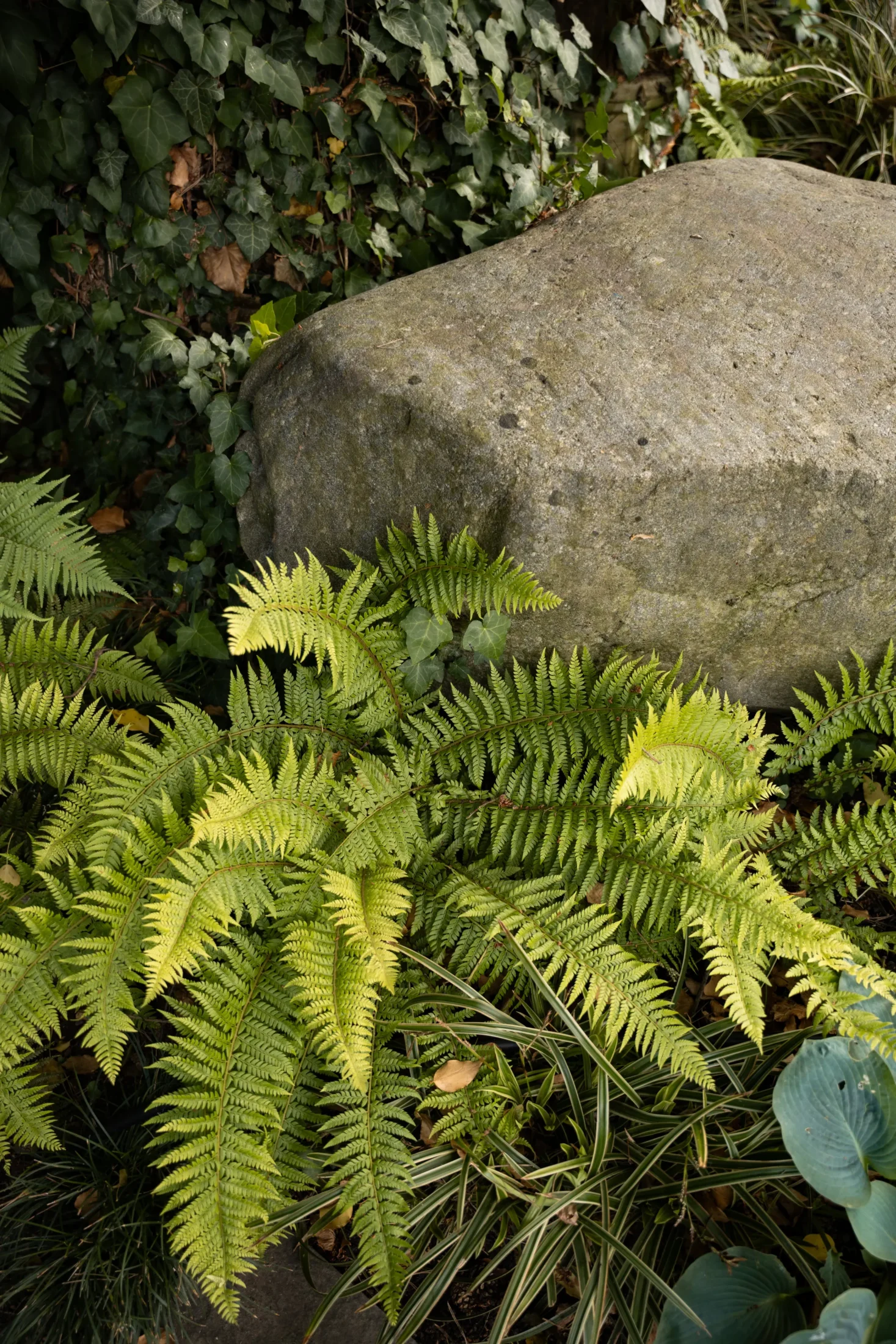
Moss-grey boulder overgrown with green ferns and trailing ivy.
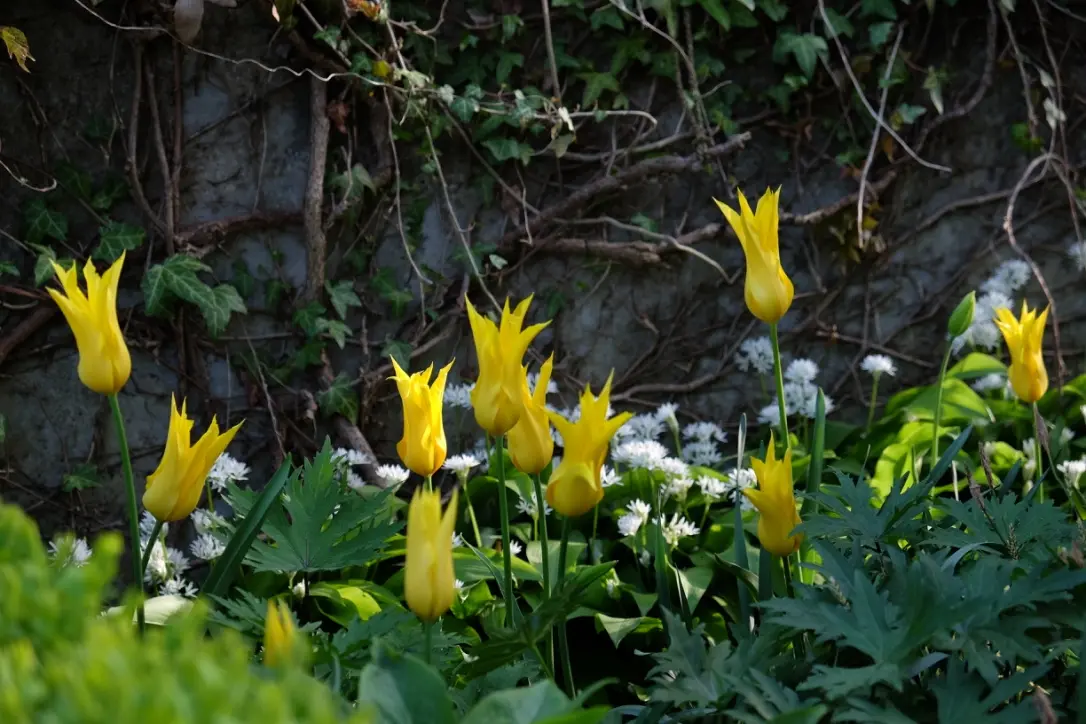
Yellow tulips glowing in front of an old natural stone wall in spring.

Tension Between Order and Freedom

A good garden lives on tension. Daniel deliberately sets symmetry against asymmetry, without ever tipping into showiness. A clipped, calm underlying order provides stability and framework, while the perennials and grasses woven between them allow for vitality, abundance and fluidity. Your garden is ordered and alive at the same time, evolving with the seasons without losing form.

The Garden Does Not End at the Property Boundary
A defining principle in Daniel’s work is Shakkei, the borrowed landscape of the traditional Asian garden. The surroundings are deliberately drawn into the garden: the horizon extends your property, and the geometric axes open up towards the topography. This makes your garden feel larger, calmer and more deeply connected to its place than the property boundary alone would suggest. From this connection between architecture, garden and landscape emerges a design that works not through momentary wonder, but through what remains once the initial wonder has passed.
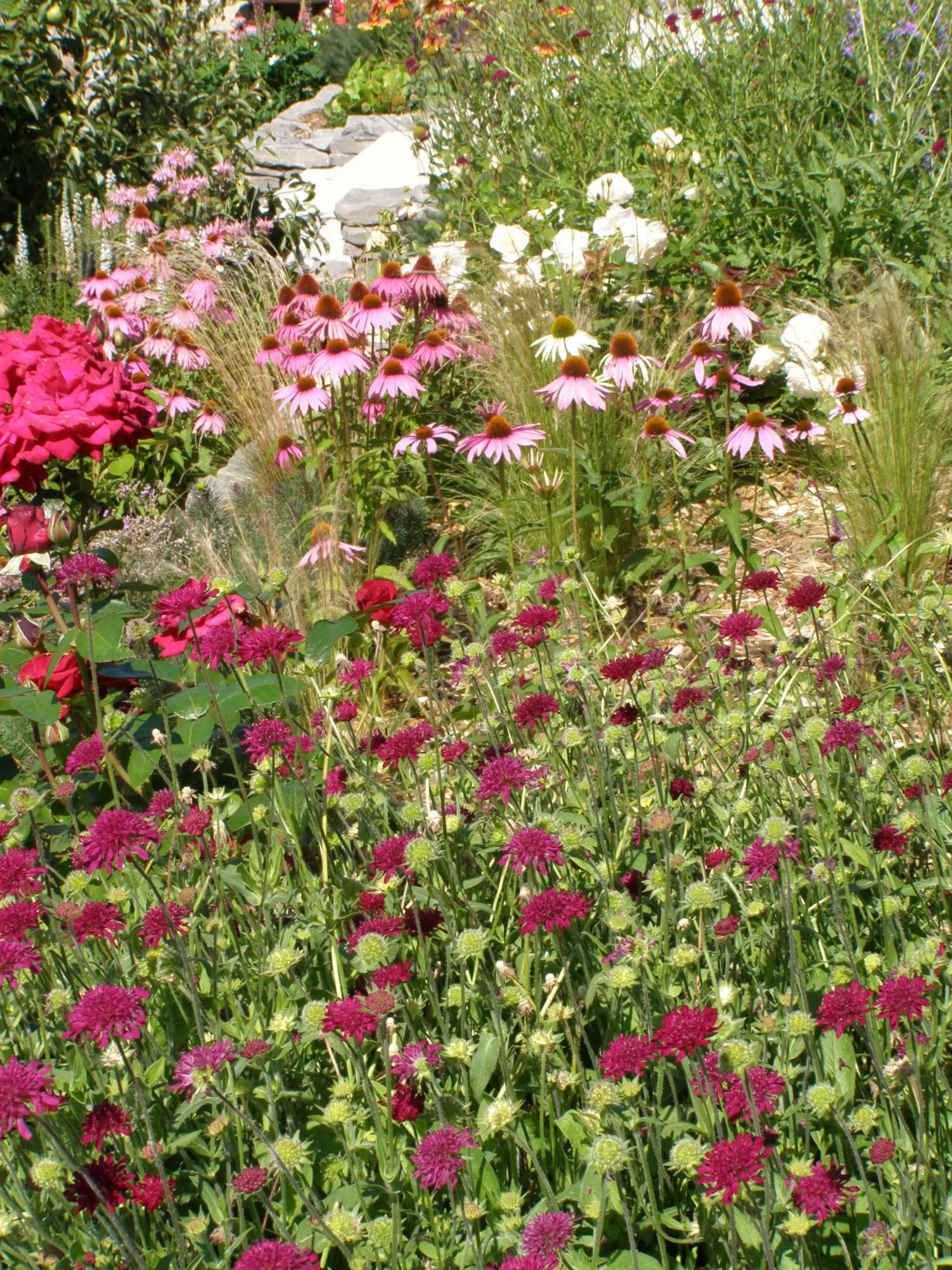
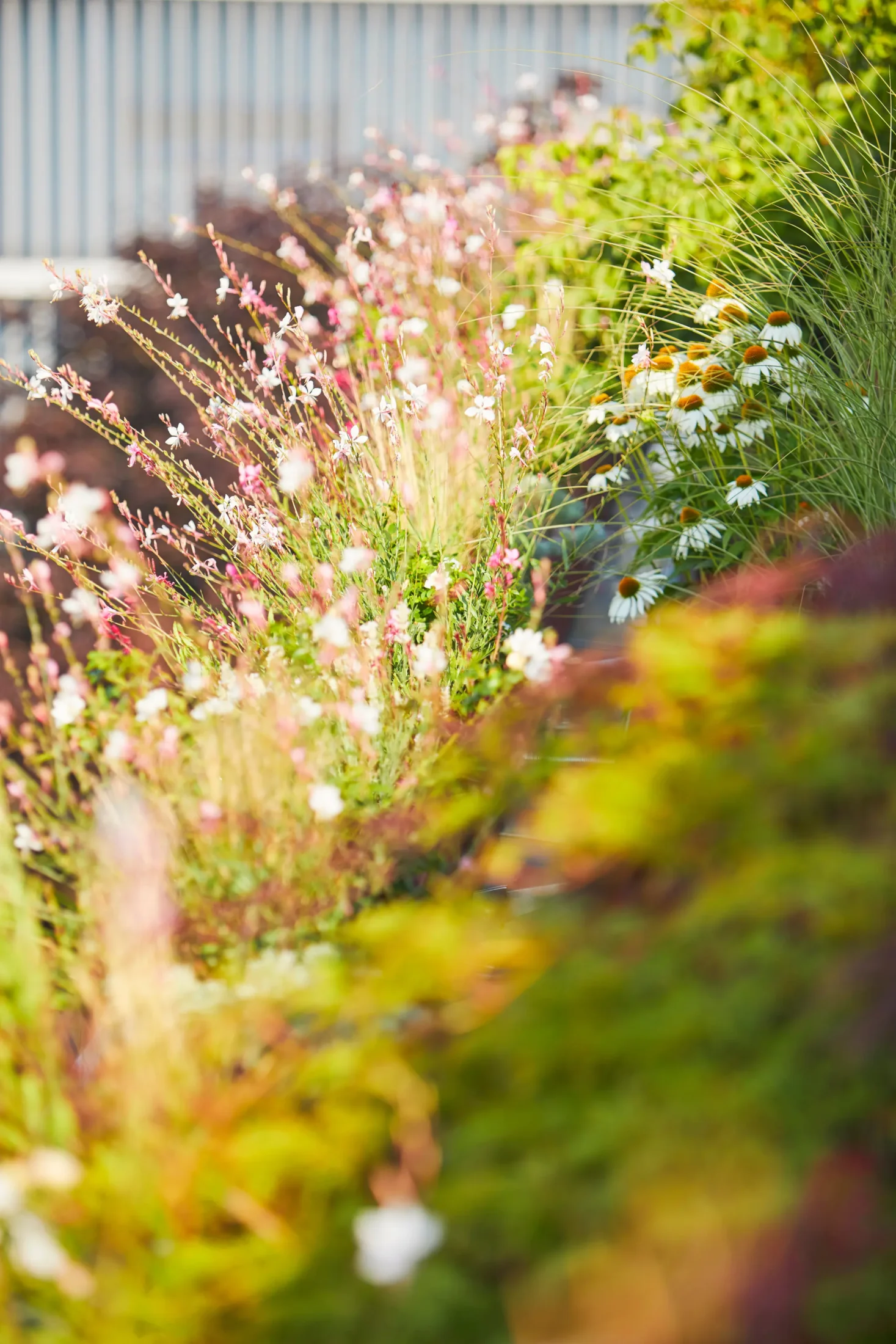
Delicate perennial bed with pink and white flowers and ornamental grasses.
Colourful perennial composition with dahlias, chamomile and ornamental grasses.

Less Is More

Daniel’s outlook has its roots in the reduced architecture of the 1930s to 1970s, in figures such as Frank Lloyd Wright, Charles and Ray Eames or Philip Johnson. From there comes the principle of transparency between inside and outside: the garden becomes an extension of the home and the house a frame for the landscape. For Daniel, less is more is not a stylistic quotation but a consequence. His question is always what can be left out so the essential can speak more strongly.

Your Garden Is an Investment That Lasts
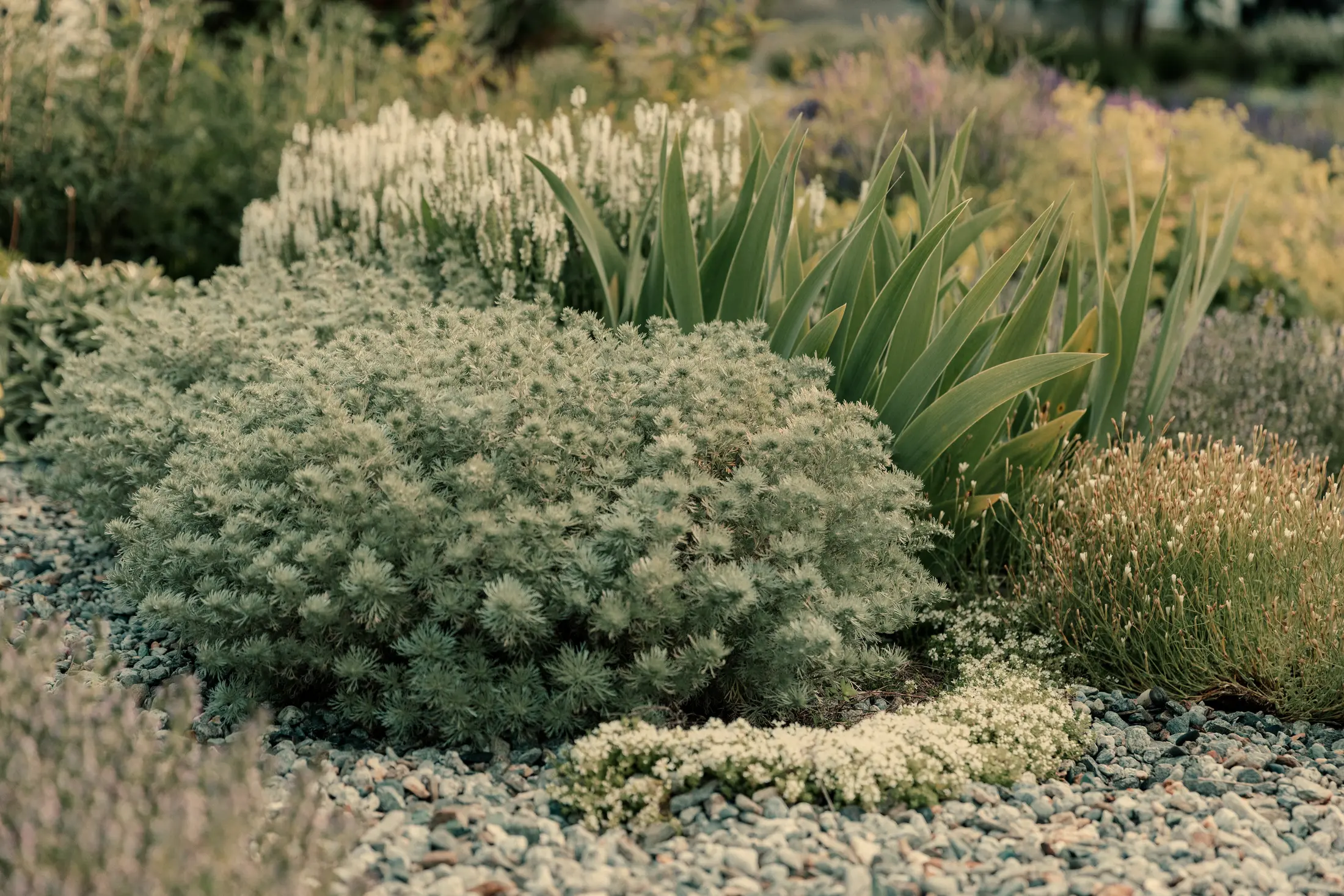
A garden by Daniel Auderset is not merely a beautiful space; it is a substantial value driver for your property. This value is created not by a fashionable single idea, but by a timeless structure that holds for decades and by ongoing maintenance that preserves it. Because species diversity, climate resilience and longevity are considered from the outset, such a garden does not age, but continues to gain in quality over the years. A wide variety of plants makes it not only more vibrant, but also more resilient to drought, pests and a changing climate. The result is a garden that lasts for generations and grows with the lives of those who live in it. If a garden is left to its own devices, however, it quickly loses value – and so does your property. Ongoing maintenance protects precisely this investment.
Silver-grey wormwood with fine foliage beside green ornamental grasses.
Pale pink peonies flowering elegantly in front of fine ornamental grass.

For Exceptional Private Gardens and Luxury Hospitality Venues

Daniel Auderset works for owners of exceptional private estates as well as for luxury hotels and the wider hospitality sector. He practises across the core territories of Bern, Fribourg, Vaud, Valais, Neuchâtel and the Swiss Central Plateau, from the Three-Lakes Region across Lake Thun and Lake Brienz to the Lake Geneva basin and the destinations of the Bernese Oberland. For those national and international clients with a primary or holiday residence in Switzerland, Daniel takes on projects beyond these regions too. These are often estates with mature surroundings, where house, garden and landscape are meant to be considered as one. Whether it is a front garden and forecourt, a terrace or a planted roof terrace, every outdoor space receives the same care and attention to detail.

“Nature is the star. Trees and plants are the leading players in the outdoor spaces I create. The materials blend in seamlessly.”

Daniel Auderset

Logos of Swiss luxury hotels and resorts in the teaser banner.

Frequently Asked Questions About Your Project

Five questions often asked before a garden project.

A garden project with Daniel Auderset proceeds in four phases:

Phase 1) Clarity: Daniel provides an honest assessment of the scope and possibilities for your project, together with an outline of the required investment.

Phase 2) Concept: Your dream garden is then designed and developed with you in preparation for its construction.

Phase 3) Realisation: Your garden is now built. Daniel Auderset takes on site supervision and  regularly checks the works.

Phase 4) Continuity: Once complete, maintenance is crucial to ensure your garden continues to grow and evolve beautifully over time. Daniel Auderset oversees it personally.

From the first idea through to maintenance, Daniel Auderset remains your single point of contact.

Yes, as a firm and distinct service. During construction, Daniel is on site to coordinate the specialists involved and checks that their work matches the design and the desired technical execution. His site supervision is the bridge between the design and the built garden and ensures that the quality is maintained down to the very smallest detail. For you, this means that what was planned is built as planned, without you having to coordinate anything yourself.
A garden is not finished on the completion of its construction. This is only the start of its development. Maintenance holds the design concept together over the years, helps the planting to establish and ensures that the structure is preserved. Without continuous maintenance, even a well-planned garden can quickly lose its quality and value. With it, the garden improves over time, rather than declines. This is why Daniel Auderset regards maintenance as a valuable service in its own right.

This depends on size, ambition and the site conditions. Concept and planning take several months depending on the project, while the construction phase depends on scope and season. It is important to remember that a garden is not finished once construction ends: it needs time to establish, and often only reaches its full potential after several years. Daniel Auderset therefore favours the long view over an instant and short-lived effect.

Native and site-appropriate plants play an important role in Daniel’s designs, because they are adapted to the location’s soil and climate, require less maintenance and support local wildlife. They make an important contribution to biodiversity and to a garden’s climate resilience. Daniel combines them with selected, well-adapted species from other regions where these make sense creatively or ecologically. What matters most is that the chosen plants suit the location and the overall concept of the garden.

Contact

Every project begins with a personal conversation. Send a message or call.

Daniel Auderset will get back to you personally.